|
|
|

Purchase
Info
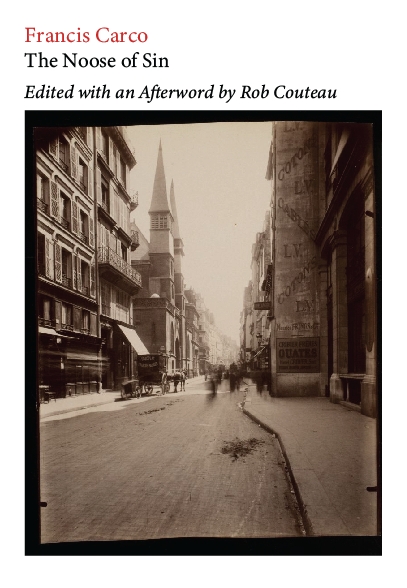
January
2026: We are pleased to announce the
publication of this newly revised
edition of Francis Carco's "The Noose of
Sin" (L'Homme traque), originally
translated by Emile Hope in 1923,
featuring an Afterword by publisher and
author Rob Couteau. "A book of singular
quality and considerable literary and
psychological distinction is brought to
the notice of the English-reading public
in M. Emile Hope's translation of
Francis Carco's The Noose of Sin. The
theme of the story is the spiritual
suffering of a man who has murdered and
robbed an old woman, and whose arrest
has been delayed. It is a theme
peculiarly appropriate to the long
assured French genius for the subtle
delineation of psychological states and
the tracing of outward action and all
its apparent irrationality to the inner
conflicts and subconscious developments
of which they are the issue; and M.
Carco falls below none in his infinitely
delicate and unlabored representation of
the tension which gradually tightens in
the man's tortured and fearful mind. The
story itself develops as the successive
phases of the murderer's attraction for
and towards a woman who knows of his
crime. The author's psychological
insight not less than his artistic
sincerity is witnessed in the fact that
every motion of these struggling
entangled souls is made comprehensible
by the sheer illumination of an
understanding which does not judge." -
Liverpool Daily Post, 25 July 1923.
Purchase
Info
November
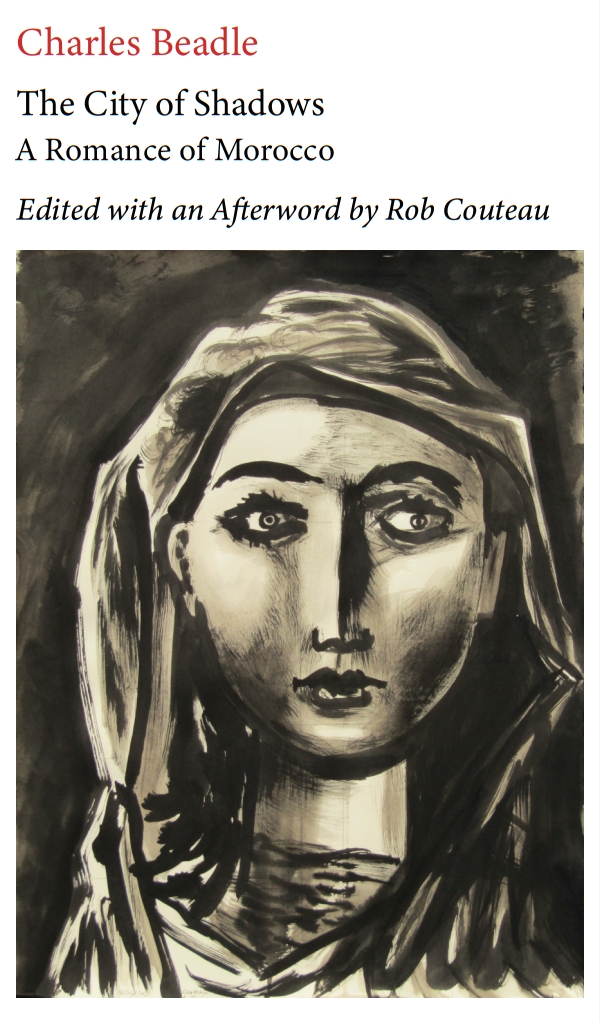
2025: "'The City of Shadows: A
Romance of Morocco' returns to
print Charles Beadle's first
novel (originally published in
1911), which vividly portrays
the 1908 Battle of Marrakech
that led to the defeat of
Morocco's Sultan Aziz. The story
is embedded in real history that
brings the times, place, and
politics to life ... These
characters and elements will
attract readers who may hold
little prior familiarity with
the politics of Moroccan
culture, but who will find
plenty of insights and
attractions woven into the
Moroccan backdrop and events....
Editor Rob Couteau provides
numerous footnotes that
reference background history.
This also is unusual for a
novel, but proves perfect as a
reference for historical fiction
readers interested in the
back-ground supporting these
events. Librarians and readers
looking for novels of North
African history that bring these
times alive through characters
that make important decisions
that affect the world around
them will relish the opportunity
to see Morocco through the eyes
of a man and woman who risk much
to achieve their vision of
happiness. The blend of high
adventure, risk-taking, and
immersion in Moroccan affairs is
cemented by characters whose
lives and concerns are realistic
and thoroughly engrossing." -
Diane Donovan, Midwest Book
Review, February 2026.
Purchase
Info
November
2025: "To have lived to the
full, to have loved, to have
fought, to have killed: that
is a man's life. And even
though the price be death,
it would be cheap at that."
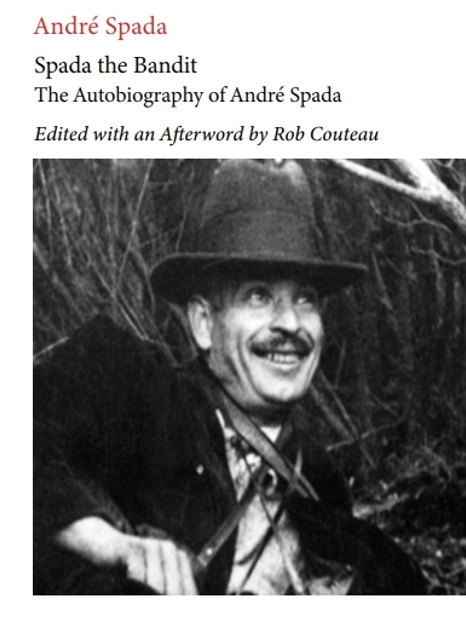
As chronicled in this
extraordinary memoir, André
Spada (1897 - 1935), the
infamous Corsican bandit
known as the "King of the
Maquis," embodied a complex
amalgam not only of Good and
Evil but also of contrary
emotions and perceptions.
These include compassion and
kindness as well as those
cold-blooded instincts that
eclipse the humanity of
those driven by abject
criminality. Thus, we have
the "two Spadas." But beyond
the idiosyncratic biography
of a particular individual,
it's through this confession
that we gain entrée to a
uniquely structured
demimonde: the world of
honorable bandits known as
the Maquisards, constructed
upon a rigid set of codes.
Part of that pledge is to
never betray their leader,
even when a steep price is
placed on his head. And even
after a French expeditionary
force is sent into Corsica
with the sole purpose of
rooting out the bandits. The
military contingent is
composed of tanks, planes,
mountain artillery, a
cannon, explosives, armored
cars, field kitchens, and
1,400 troops; yet they fail
to capture Spada and are
eventually withdrawn. But a
police campaign finally
succeeds in forcing Spada
out of his lair and driving
him across the island.
Available for the first time
since 1935, this annotated
edition features an in-depth
Afterword by literary author
Rob Couteau.
August
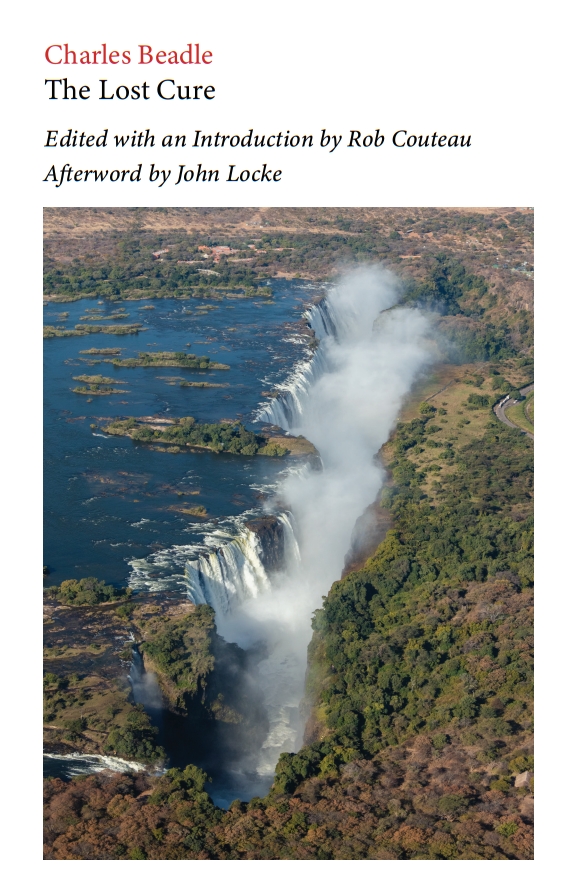
2025: The Lost Cure is featured
in Adventure magazine’s 30
January 1923 issue but has never
before been published in book
form. As always, Beadle’s work
resonates with potent
authenticity, because it’s
deeply grounded in actual
experience. A courageous
explorer and innovative writer,
he spent a dozen years in Africa
between 1898 and 1910, building
a treasure trove of memories and
observations that would later
nourish his stories, essays, and
novels.
Upon
expatriating to France, he was
soon befriending budding
visionaries such as Picasso, Max
Jacob, and Modigliani, who
sketched Beadle circa 1915.
After traveling throughout the
U.S. during the war years, in
1919 he returned to Place de
Tertre in Montmartre, which was
still a vibrant cultural focal
point, and which would inspire
the setting of Beadle’s greatest
novel. Thanks to Jack Kahane,
the legendary founder of Obelisk
Press, Beadle’s banned
masterpiece, Dark Refuge, was
published in Paris in 1938. In
1941 Faber and Faber published
Artist Quarter, a nonfiction
work pseudonymously coauthored
by Beadle with Douglas Goldring
– considered to be the urtext of
Modigliani biography.
Purchase
Info
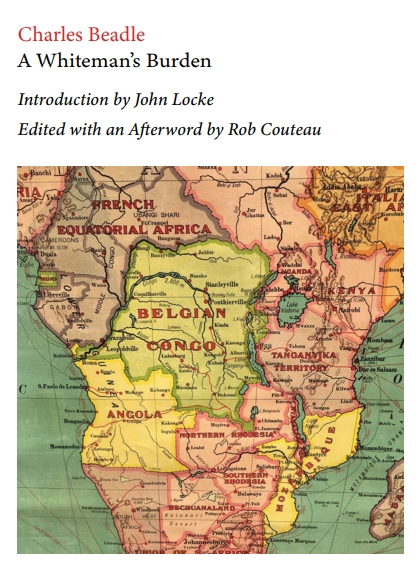
Few
works of literature deal
with the sleeping sickness
epidemic that killed
hundreds of thousands of
Africans at the turn of the
century. One notable
exception is Charles
Beadle’s A Whiteman’s
Burden, published in
1912, when African
trypanosomiasis was still
claiming lives in Uganda and
the Congo: sites of his
numerous expeditions. Beadle
traveled through the most
infected areas in the early
1900s – at the very peak of
the catastrophe – when
Uganda lost a quarter of a
million inhabitants and the
number of infected Congolese
had reached several hundred
thousand. His presence in
Africa between 1898 and 1910
lends us a rare personal
insight into this larger
collective crisis.
With
its abundant depictions of
absurdity, alienation, and
isolation as the characters
confront the dreadful
vicissitudes of life and the
indifference of the
glittering cosmos swirling
above the vast African
firmament, we’re left to
wonder: Is A Whiteman’s
Burden one of
Europe’s first existential
novels?
Purchase
Info
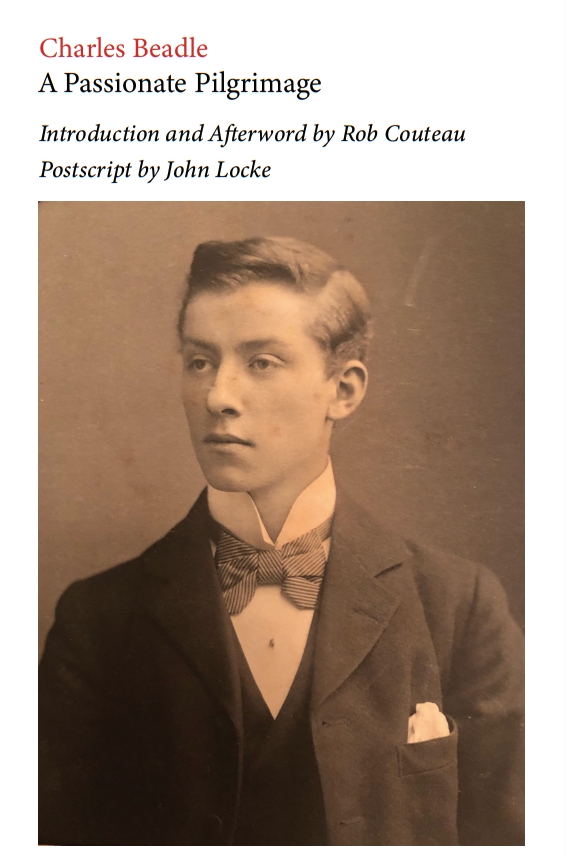
In
1915, Charles Beadle
authored a banned literary
novel, A Passionate
Pilgrimage: one of
ten books blacklisted
between 1914 and 1916 by
Britain’s Circulating
Libraries Association.
Drawing from personal
experience, the author
affords us a glimpse into
the underbelly of Victorian
society, breaking through
the “mind-forg’d manacles”
of what was then considered
as a “tasteful” tale and
exploring points of view
that only an anti-Victorian
story might dare encompass.
With the publication of Dark
Refuge (1938), he
produced an even more
provocative chronicle – one
that was also banned in the
Anglo-Saxon world due to its
brazen portrayal of the
Parisian demimonde. Both
these censored books portray
the shifting mores of the
times and encompass a major
trajectory in the author’s
life. Back in print for the
first time since 1915, this
newly revised edition
features over 200
annotations, an in-depth
Introduction and Afterward,
a Postscript by John Locke,
and a transcript of Beadle's
previously unpublished
letters to his niece Isabel.
It also includes a
reproduction of a newly
uncovered portrait of Beadle
by the artist Amedeo
Modigliani.
"A
Passionate Pilgrimage
was first published in 1915,
when it earned the acclaim
of being one of ten books
blacklisted for years by
Britain’s Circulating
Libraries Association.
Modern readers may be
puzzled by this fact when
they read this novel; but
its descriptions of
free-ranging sensual
encounters between the
protagonist and a host of
consenting women made it a
scandalous piece at the turn
of the century. Why reissue
A Passionate Pilgrimage
now? The introductory notes
(which are extensive and
vital to understanding the
novel’s continuing
importance) state that the
novel: 'provides a variety
of clues about Beadle’s
early life.' In so doing, it
reveals the essence of
social and psychological
transformation, toeing the
line between autobiography
and a fictional discourse
containing many topics vital
to understanding not just
these times, but modern
morals and values. Its
subjects and considerations
make for thoroughly
engrossing reading,
presented in a way that
builds the character’s
focus, emphasizes his
differences, and ultimately
creates a captivating tale
of transformation and
insight. Libraries that
choose A Passionate
Pilgrimage will find
it highly recommendable to
students of literature;
teachers seeking novels that
hold lively debates about
not just banned literature,
but banned ideas; and book
clubs that will find A
Passionate Pilgrimage
thoroughly
thought-provoking.”
- Diane Donovan, Senior
editor, Midwest Book
Review

PURCHASE
INFO: Amazon
/ Bookfinder
"If,
perchance, From
Montmartre to the Latin
Quarter sounds
familiar, that's because
Francis Carco's memoir was
first published in 1927.
This annotated edition
makes his work more
accessible to a wider
audience, includes Rob
Couteau's analytical
Introduction and a new
Afterword by Christopher
Sawyer-Laucanno, and
follows the experiences of
an 1886 poet, artist, and
traveler who fell into a
close, supportive
association with bohemian
Paris. There the young man
creatively blossomed,
immersed in the arts and
producing over a hundred
books that ranged from
poetry to his own astute
analyses of other artists,
including a critical essay
on Modigliani which
revealed the man's value
at a point where other
French critics scoffed at
his works.
From Montmartre to the
Latin Quarter is
more than your typical
biography. It assumes the
atmospheric draw of a
Proust production with its
'you are here' survey of
Paris' artistic community.
Couteau's footnotes add
critical reflections and
interpretations key to
understanding Carco's
objectives and
perspectives. Both Carco
and researcher Rob Couteau
create compelling
observations, insights,
and historical value, but
couch these in lively
language and passages that
should reach into
general-interest audiences
who hold an appreciation
for all things Parisian
and for its arts community
of the early 1900s. Its
survey of friendships,
relationships, and the
artistic promise quashed
by events of the Great War
create a lively, memorable
read especially
recommended for those who
appreciate in-depth
footnoted references.
These enlighten readers on
facets of Carco's life
that might otherwise slip
by with a reading of the
memoir alone.
All
these facets make From
Montmartre to the Latin
Quarter an astute
historical and literary
memoir that embraces the
arts, social and political
milieu, and powerful
perspectives of the times.
Libraries (including
general-interest
collections as well as
college-level holdings
strong in memoirs and
artist history) will find
it easy to recommend From
Montmartre to the Latin
Quarter for its thoroughly
engrossing, richly
realistic passages, firmly
embedded in Carco's life
and the creations and
influences of 1900s
Paris."
- Diane Donovan, Senior
editor, Midwest Book
Review

PURCHASE
INFO
"Here
we have a new, possibly
classic memoir of New
York. It begins in
Gravesend, Brooklyn, and
moves outward, to
Manhattan and Paris ...
That there still exists a
path to a writer's life
that is not a dutiful
march through creative
writing academies, with
perhaps the apotheosis of
becoming a teacher of yet
more academy-shaped
writers, is heartening to
learn. Couteau does not
make fun of that approach
nor of any other, but he
does model something much
different, and to see him
continuing to write books
like this one, which well
deserves a place on his
already considerable shelf
of valued books, is
excellent news."
- Robert Roper, author of
Nabokov in America: On
the Road to Lolita
and Now the Drum of
War: Walt Whitman and
His Brothers in the
Civil War.
"As
Couteau moves through
different worlds
(including France),
encountering literary,
artistic, and social
figures, he finds a new
sense of home, place, and
purpose which translates
to social and
philosophical revelations
about life, religion, and
the world. Ultimately, his
very method of engaging
with other worlds is what
links readers to his life
and the exuberant march of
its encounters and
revelations.... Five
hundred pages go by in the
blink of an eye as readers
absorb an intriguing
memoir that deserves a
place in any library
strong in memoirs that
embrace literary,
artistic, and social
transformation."
- Diane
Donovan, Senior
Editor, Midwest
Book Review.
We're
proud to announce
the publication of
Stanley Marks'
visionary play, A
Murder Most Foul!
A Three-Act Play
About the JFK
Assassination.
Introduction by Rob
Couteau. Afterword
by James DiEugenio.
On
February 19, 1968,
author Stanley Marks
copyrighted his
first play, a
visionary attempt to
penetrate the Deep
Politics matrix of
the JFK
assassination. Among
other things, the
play predicts the
assassination of
Bobby Kennedy, which
occurred only 3 1/2
months later; as
well as the eventual
presidential
election of Ronald
Reagan. This
manuscript sat in a
Library of Congress
box collecting dust
until 13 April 2023,
when it was
published in book
form for the very
first time.
"Attorney
Stanley Marks was
one of the very few
people in America
who read both the
888 page Warren
Commission Report
and the accompanying
26 volumes of
testimony and
exhibits. Out of
that mountain of
material, his book
features 975
questions for the
prosecution. In a
relentless and
blistering manner,
he showed why the
case against Oswald
should not go to
trial. In other
words, he stopped
the Commission right
out of the starting
gate.... I could go
on and on about the
critical acuity and
comprehensiveness of
Stanley Marks' work
and how it differs
in kind from that of
other
first-generation
critics.... What is
so remarkable about
Stanley is that his
analytical efforts
were not enough for
the man. He
attempted to bring
this heinous crime
to the attention of
the public through
his efforts as a
playwright. And,
thanks to Couteau,
we now have his play
about the
assassination of
President
Kennedy."
-
Scholar and
historian James
DiEugenio, the
world's leading
authority on the JFK
case, author of Destiny
Betrayed: JFK,
Cuba, and the
Garrison Case
and The JFK
Assassination,
and screenwriter of
Oliver Stone's
documentary, JFK
Revisited.
PURCHASE
INFO
From
the Postscript by
Christopher
Sawyer-Lauçanno:
"Beadle is the real
deal. And Rob
Couteau is the real
deal too. Without
his desire to rescue
Dark Refuge
from oblivion, we
would all have
missed out on a
tremendous modernist
novel that should
rank among other
classics such as Tropic
of Cancer,
Nightwood, Nadja,
Ulysses, To the
Lighthouse,
and, of course, Naked
Lunch. And
thanks to his
extensive
annotations and deep
research, we have
both the novel and
the context that
created it. I am
admiring and
grateful."
Diane
Donovan, Senior
Editor, Midwest
Book Review:
"Dark
Refuge
appears in
print for the first
time since its
original publication
in 1938, presenting
a world traveler’s
experiences with
bohemian life in
Paris in a novel
that also serves
(thanks to Rob
Couteau) as a
biography of
Beadle’s life.
Extensive
annotated references
link Beadle’s
experiences to his
fictional
representations,
offering a literary
backdrop for
understanding both
the atmosphere and
progression of his
fiction and its
roots in reality.
Readers
should be prepared
for a sexual romp
that is ribald,
explicit, and
thoroughly steeped
in Beadle’s personal
experiences of the
times. Beadle’s
language is
evocative, poetic,
and dramatic: ‘I
simply slip through
the other room of
the café and out
into the other
boulevard, laughing
to twist my guts.
Nobody knows that I
have a rendezvous.
The coat and hat
annoy me. How silly!
I throw them away as
I run, for I know it
is late and I’m
frightened that my
beloved will not
wait. God is crying
harder than ever,
and I suck in his
tears. How funny it
must be to weep!’
Whether
exploring drug
experiments and the
revelations that
follow them or
descending into the
sordid and colorful
world of bohemian
Paris, Beadle
flavors all of his
impressions with the
same attention to
flowery detail that
makes his writing so
time-less:
‘Inexorably I was
borne along up this
staircase of Time as
an express lift
passes floors,
glimpsing worlds
where the highest
form of life was
apes chattering
futilely in leagues
of simian nations of
their own; where
vast beasts
resembling tanks
plunged through
swamp and over
prairie; where the
sky was of steam and
gas, and volcanoes
burst like
firecrackers on a
Chinese New Year
amid a seething sea;
and on and on until
there were no more
worlds and naught
seemingly but
incandescent void.’
Pair
this with the
extensive notes and
annotated references
Couteau injects to
not just explain but
expand the story,
for a sense of the
unique literary and
historical
importance of this
reappearance of
Beadle’s rare
classic, which has
been out of print
for far too long.
Libraries
seeking literary
representations of
the marriage between
fiction and
nonfiction will find
Dark Refuge
a fine example. The
200+ annotated notes
come from previously
unpublished letters
and documents,
combining with
photos and
historical reviews
to represent a
hallmark of not only
literary fiction,
but biographical
research.
Dark
Refuge
deserves a place in
any library strong
in works of
literature that
represent the
intersection between
fictional devices
and biographical
inspection, whether
or not there is
prior knowledge of
or interest in
Beadle’s works and
importance."

PURCHASE
INFO
Book
review by
Scott Sublett,
New Art
Examiner:
"A Blind Man
Crazy for Color:
A Strange Tale
from the Annals
of Art
Collecting":
In
Paris of the
1910s, when
hungry artists
would take
almost any
pittance for
their work, an
old man of
extremely
limited means
scooped up
Picassos,
Modiglianis,
Utrillos,
Matisses and
Cezannes, each
painting bought
for the price of
a couple of good
restaurant
meals. The
prescient old
man’s collection
would, today, be
worth hundreds
of millions, if
not billions,
and one might
say the old man
had a
superlative eye,
were he not
blind.
In
his strange,
fascinating new
book, A
Blind Man
Crazy for
Color,
writer-painter
Rob Couteau
assembles and
unearths what
little can be
known about the
mysterious
collector Léon
Angély, a bald,
fat, retired
solicitor’s
clerk who
gambled what
small money he
had on the dream
of assembling a
collection that
could someday
finance a
luxurious
retirement in
Nice.
When
Père Angély
started
collecting, he
was already
myopic but could
still see. Over
a period of
about 20 years,
though, his
vision
disappeared. “I
have only one
fan, and he’s
blind,”
Modigliani is
quoted as
saying. (In the
book’s footnotes
there’s another
lovely
Modigliani
quotation: “I do
at least three
paintings a day
in my head.
What’s the use
of spoiling
canvas when
nobody will
buy?”) Rather
than let
blindness end
his Sunday
afternoon visits
to studios,
Angély continued
collecting with
the help of a
poor, unschooled
young girl, on
whose shoulder
his hand rested
as they made
their way
through
Montmartre.
Little Joséphine
would describe
the paintings,
and on the basis
of her simple
descriptions, he
would choose.
Figures as
distinctive as
Léon and
Joséphine were
certainly
noticed. Couteau
quotes John
Richardson’s A
Life of Picasso
as asserting
that the painter
was fascinated
by the old,
blind collector,
and Richardson
goes on to
speculate, quite
plausibly,
“Picasso may
have drawn on
his memory of
the sightless
art lover and
his child guide
when in 1934 he
depicted a blind
Minotaur being
led around by a
little girl.”
It’s likely Léon
and Joséphine
were beloved
Montmartre
characters,
despite the old
man’s tightness
with a franc.
Adding another
layer of
resonance to
Couteau’s slim
volume are the
charming
illustrations by
Lydia Corbett,
also known as
Sylvette David,
the pony-tailed
model and muse
who inspired
Picasso’s
Sylvette Period
(and whose
hairstyle was
copied by
Bridgette
Bardot). Now 87
and living in
Devon, Sylvette
had a show seven
years ago at
London’s Francis
Kyle Gallery. It
may seem tragic
that Angély died
in 1921, before
the artists he
discovered
skyrocketed in
value. To keep
body and soul
together in
inflation-racked
post-World War I
Paris, he
disposed of his
collection for
little more than
he had paid.
Still, for
decades he had
the aesthetic
thrill of some
of art history’s
greatest
accomplishments
covering his
shabby garret
walls, and for
some of that
time, he could
see them.
Diane
Donovan,
Senior Editor,
Midwest Book
Review:
A
Blind Man
Crazy for
Color: A
Tribute to
Léon Angély
documents an
early 20th
century
retired clerk
who collected
art by
Picasso,
Modigliani,
and Utrillo
before these
artists were
famous.
Despite his
failing
vision, Léon
Angély could
see the
promise of
these artists
before those
around him
acknowledged
their talents.
He employed a
young girl to
help him make
his selections
when his sight
no longer
permitted him
to personally
enjoy them.
The
book is
illustrated with
original artwork
by Picasso's
model and muse,
Sylvette David,
who posed for
the painter in
1954 when she
was only
nineteen years
old. Her black
and white and
color sketches
accent this
colorful
portrait of
Léon's life,
motivations,
involvement in
the art world,
and the pieces
he collected.
Previously
unpublished
information
about the blind
man's passion
and his
influence on the
art world
enhances a
survey that
should be
required reading
and acquisition
for any serious
art history
student and the
libraries
catering to
them.
The
well-researched
treatise is
supported by
documentation
that ranges from
birth and death
certificates to
Rob
Couteau's
personal
research into
Sylvette David
who, at
eighty-seven,
adds her
memories to the
story to expand
reader insights
about both
Picasso and
David's life and
their art
involvements.
Readers
also receive
revealing
inspections of
the process of
interviewing
artists and
capturing their
historical and
artistic impact,
adding to A
Blind Man
Crazy for
Color's
importance as a
survey that goes
beyond a
singular
biography of an
art enthusiast
to delve into
the world of
artists, art
appreciation,
and muses. The
blend of all
these elements
demonstrates the
interlinked
potentials and
importance of
artists, muses,
and those who
appreciate,
purchase, and
analyze their
work:
"Although
he died
impoverished and
nearly
forgotten, and
although the
identity of his
youthful guide
is still
enshrouded in
mystery, le Père
Angély helped to
preserve what
Richardson calls
the “sacred
stuff of art” –
regardless of
whether his
motivation was
merely
pecuniary. Léon
and Joséphine
may also have
inspired the
greatest artist
of the twentieth
century."
Serious
art libraries
should consider
this
extraordinary
recreation of
artistic
ambitions
against all odds
a mainstay that
stands out in
many different
ways.
Available
for the first time
since February
1970: Stanley J.
Marks' Coup
d'Etat,
with an
Introduction by
Rob Couteau.
"A
good book by a
keen and
knowledgeable
attorney. Rob
Couteau has done a
service by
bringing these
books back. Marks
was a buried gem."
-
James DiEugenio,
the foremost
scholar of the JFK
assassination and
author of Destiny
Betrayed: JFK,
Cuba, and the
Garrison Case.
DiEugenio is also
the screenwriter
of Oliver Stone's
documentary, JFK
Revisited:
Through the
Looking Glass
(2021).

Diane
Donovan,
Senior editor,
Midwest Book
Review:
"SELECTED
POEMS features 101
poems, 40 of which
have been printed
in numerous print
and online
journals since
1985. The rest are
new to this
collection, and
represent a
satisfying blend
of old and new
works designed to
appeal to
newcomers and
prior fans alike.
Rob Couteau's
works are diverse.
They follow no set
poetic structure,
even defying some
of them when the
muse strikes and
special needs
indicate that the
subject is more
important than
poetic form....
His inspections of
artistic,
literary, and
social issues are
astute and
compelling....
Don't anticipate
set structures,
uniform poetic
approaches, or
singular subjects
here. SELECTED
POEMS offers a
freewheeling
approach to poems
and life alike,
and is a thought
provoking,
evocative
gathering of works
recommended for
literary readers
not bound by
convention or
rules." With an
Introduction by
the poet, critic,
and literary
historian Edward
Foster.

"Rob
Couteau has
performed a
miraculous deed.
He has gotten two
of the late
Stanley Marks'
books on the JFK
case republished.
Marks was way
ahead of the
field. While
people like Harold
Weisberg and
Josiah Thompson
were still
counting bullets,
he was calling
JFK's death a coup
d'etat. That is
the perspective he
wrote from way
back in the late
Sixties. Don't
pass up the chance
to meet up with a
prophet. Read both
of these books.
You will be
shocked by the
insight in them."
-
James DiEugenio,
JFK scholar and
author of Destiny
Betrayed,
commenting on Murder
Most Foul! and
Two Days of
Infamy.
DiEugenio is also
the screenwriter
of Oliver Stone's
2021 documentary,
JFK Revisited:
Through the
Looking Glass.

PURCHASE
INFO
Stanley
J. Marks' MURDER
MOST FOUL! is now
back in print for
the first time
since September
1967. Includes Rob
Couteau's
biographical essay
on the blacklisted
author's
groundbreaking
work and how it
may have
influenced Bob
Dylan's JFK ballad
of the same name.
JFK
scholar Jim
DiEugenio writes:
"Couteau's
work is important,
first-rate, and a
wonderful homage
to one of the most
important critics
of the Warren
Report ever ...
and an unsung hero
in the JFK case.
Stanley Marks was
rocket miles ahead
of everyone. He
really understood
the big picture
early. And not
just on the JFK
case." DiEugenio
is the foremost
scholar on the
Kennedy
assassination,
author of Destiny
Betrayed: JFK,
Cuba, and the
Garrison Case,
and scriptwriter
for Oliver Stone's
documentary, JFK
Revisited:
Through the
Looking Glass
(2021). 400 pages,
with
illustrations.

PURCHASE
INFO
"Chapters
explore not just
each individual's
actions, but their
backgrounds,
reasons for
participating in
Occupy Wall
Street, and their
experiences, and
offers criticism
of media reporting
of the movement's
history,
intentions, and
approaches. From
how participants
decided to react
to violent
antagonism against
the Occupy
movement to the
social and
political
ramifications of
not just Occupy
but the elements
it opposed, these
interviews capture
participants from
all walks of life,
from teens to
full-time workers,
and turns the
newspaper reports
into a series of
personal vignettes
about Occupy's
deeper meaning."
-
Diane Donovan, Midwest
Book Review.

"Couteau's
essays are
informal, fervent,
and well-versed
examinations of
the work or author
at hand. At their
best, they include
fascinating
insights into the
significance of a
writer like Hubert
Selby.... The
interviews are
uniformly strong
and include
conversations with
Michael Korda on
T.E. Lawrence,
Justin Kaplan on
Walt Whitman, and
Robert Roper on
Vladimir Nabokov.
Not all of them
focus on
literature: author
Jeffrey Jackson
covers the 1910
flood of Paris and
why it's
relatively
forgotten; and
Robert De Sena, in
one of the best
interviews,
discusses his life
as a gang member
turned community
activist.
Couteau's passion
and wealth of
knowledge are
obvious throughout
the book ... and
should appeal to
many readers."
- Publishers
Weekly Select.
"The 'Renaissance
Man' is a
multi-faceted
individual whose
fingers are in
just about every
pie you could
imagine, fostering
a variety of
abilities and
mastering many
quite well. His
expertise is
wide-ranging and
there's seemingly
no limit to his
subject, as is
demonstrated in More
Collected
Couteau: Essays
and Interviews,
which gathers
Couteau's insights
and encounters
with a diverse
range of
individuals... The
joy of reading
Couteau lies as
much in his
penetrating,
crystalline
language as it
does in the works
or figures being
examined, and so
readers receive a
wide-ranging treat
that examines
victims,
vengeance,
mortality and
immortality
through an
inspection process
that educates even
those unfamiliar
with the
subject.... After
proving his
prowess at the
essay form, he
turns to the heart
of the collection:
its interviews.
These range from
discussions with
Albert Hoffman
(activist and the
discoverer of LSD)
to interviews with
literary figures
such as historian
and cultural
commentator Robert
Roper or poet
Christopher
Sawyer-Lauçanno.
One of the
pleasures in this
collection is that
readers needn't
have prior
familiarity with
the writers'
works. Couteau
provides that
familiarity by the
structure of his
interview
questions, which
probe the
foundation beliefs
of each figure....
From the
possibility that
Nabokov suffered
unconscious doubts
about his own
value that led him
to insist that the
world acknowledge
him as a genius to
the underlying
patriotism of
counterculture
icons who were
commonly seen as
rebels ... both
essays and
interviews are
designed to make
readers think
about underlying
psychology, social
perceptions, and
cultural change.
Readers seeking
not just a
literary
presentation but a
lively analysis of
selected
wordsmiths and
their lives and
influences must
add More
Collected
Couteau to
their reading
lists. It's a
powerful
presentation that
offers much
insight and food
for thought, and
which should find
its way into many
a college
classroom as well.
- Diane Donovan, Midwest
Book Review.
PURCHASE
INFO
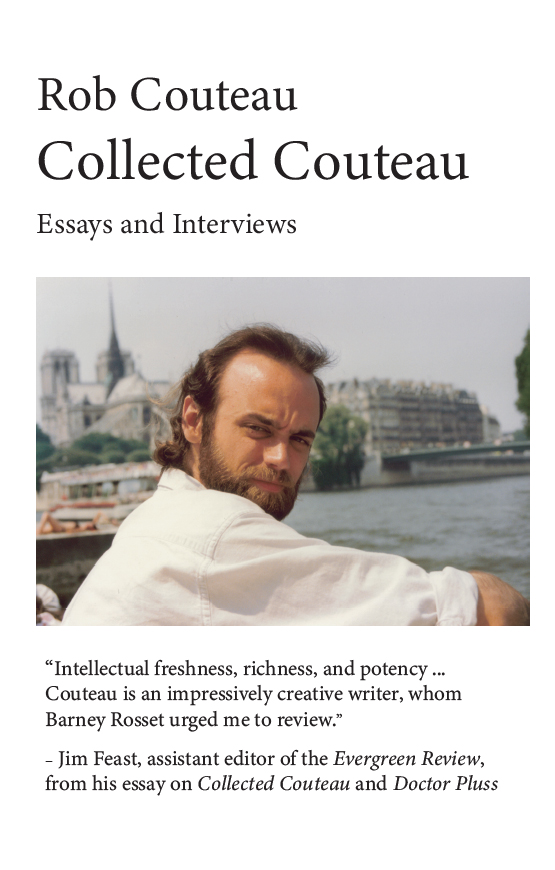
Collected
Couteau
features an
anthology the
author's early
writings and
publications. It
contains the only
complete,
unabridged
versions of
interviews with
Ray Bradbury and Last
Exit to Brooklyn
author Hubert
Selby. The
188-page
trade-sized
paperback also
features an
unabridged
interview with
Paul Bowles'
biographer
Christopher
Sawyer-Lauçanno,
in which the
author discusses
Paul Bowles, Allen
Ginsberg, William
Burroughs,
Louis-Ferdinand
Céline, and the
Beats. The
collection
includes an essay
on Walt Whitman
and numerous book
reviews, including
essays on Tea
in the Harem,
by Mehdi Charef; The
Demon and
The Room,
by Hubert Selby; Libra,
by Don DeLillo; Love
in the Time of
Cholera, by
Gabriel Garcia
Marquez; The
Mustache,
by Emmanuel
Carrère; A
Literate
Passion: The
Letters of Anais
Nin and Henry
Miller, and
a review of Allen
Ginsberg's 1990
photography show
in Paris. It also
contains an
in-depth review of
Carl Jung:
Wounded Healer
of the Soul,
by Claire Dunne;
and Jung, My
Mother and I.
The Analytic
Diaries of
Catherine Rush
Cabot, by
Jane Cabot Reid.
"Intellectual
freshness,
richness, and
potency ...
Couteau is an
impressively
creative writer,
whom Barney Rosset
urged me to
review." - Jim
Feast, assistant
editor of the Evergreen
Review,
from his essay on
Collected
Couteau and
Doctor Pluss.

PURCHASE
INFO
"Doctor
Pluss is
exceptionally well
developed and
emotionally
compelling,
connecting
metaphorical
description with
experiences that
often challenge
the traditional
roles of doctor
and patient,
linking them in
unexpected ways
... Couteau is not
afraid to push the
literary
boundaries of
convention in
pursuit of a
different form of
descriptive truth,
bringing readers
along in a
rollicking ride
through
schizophrenic
experience that
ultimately
questions the
foundations of
reality and
perception from
both sides of the
therapist's couch
... His
interpretations
and descriptions
of the
schizophrenic
experience are
particularly
astute,
astonishing, and
evocatively
described ...
Readers who choose
Doctor Pluss
are in for a
treat. It's like One
Flew Over the
Cuckoo's Nest
on steroids: a
thought-provoking
examination of
sanity, insanity,
and the crossover
process that
leaves readers
thinking long
after this
therapeutic slice
of life is
consumed."
- Diane Donovan, Midwest
Book Review.
"Amazingly
beautiful,
haunting prose.
It's a great
book."
- Christopher
Sawyer-Lauçanno,
author of The
Continual
Pilgrimage:
American Writers
in Paris
(City Lights) and
An Invisible
Spectator: A
Biography of
Paul Bowles
(Grove Press).
"Intellectual
freshness,
richness, and
potency ...
Couteau is an
impressively
creative writer,
whom Barney Rosset
urged me to
review."
- Jim Feast,
assistant editor
of the Evergreen
Review,
from his essay
on Collected
Couteau
and Doctor
Pluss.
|
|